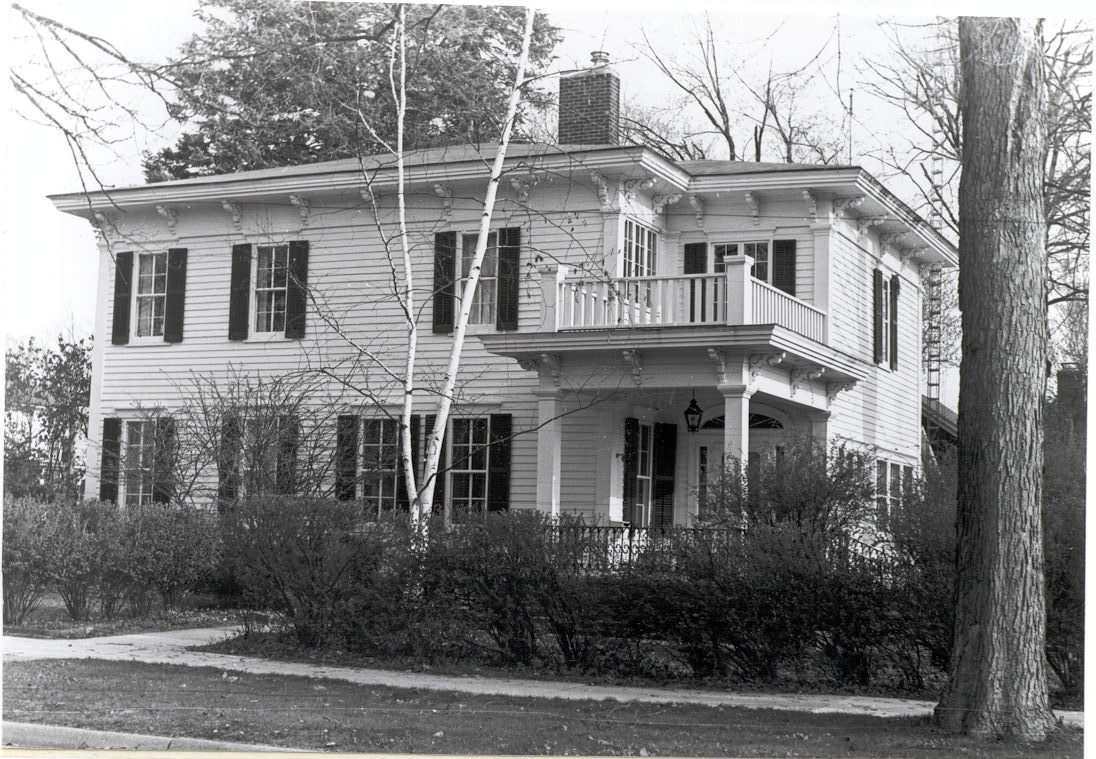
262 West Church Street
Researched and Written by Ruth Ann Montgomery
RMontgomery@litewire.net
John Andrews came to Wisconsin as a pioneer. He would live the pioneer’s life all of his years. His wife,
Sarah Wright Andrews, had no wanderlust. She settled into the home at 262 West Church Street in
1868 and except for occasional trips to the Dakotas, remained there till her death in 1912.
All of the Andrews children, three sons and two daughters were born after John and his young bride
moved to Argyle, Wisconsin in the 1850s. John was a native of Norwalk, Ohio and Sarah was an English
immigrant, the daughter of a forester who had charge of the timber of the estate of the Duke of Rutland
in Barkstone, Leicestershire, England. When their oldest child, Byron, was sixteen, they decided to
move to Evansville.
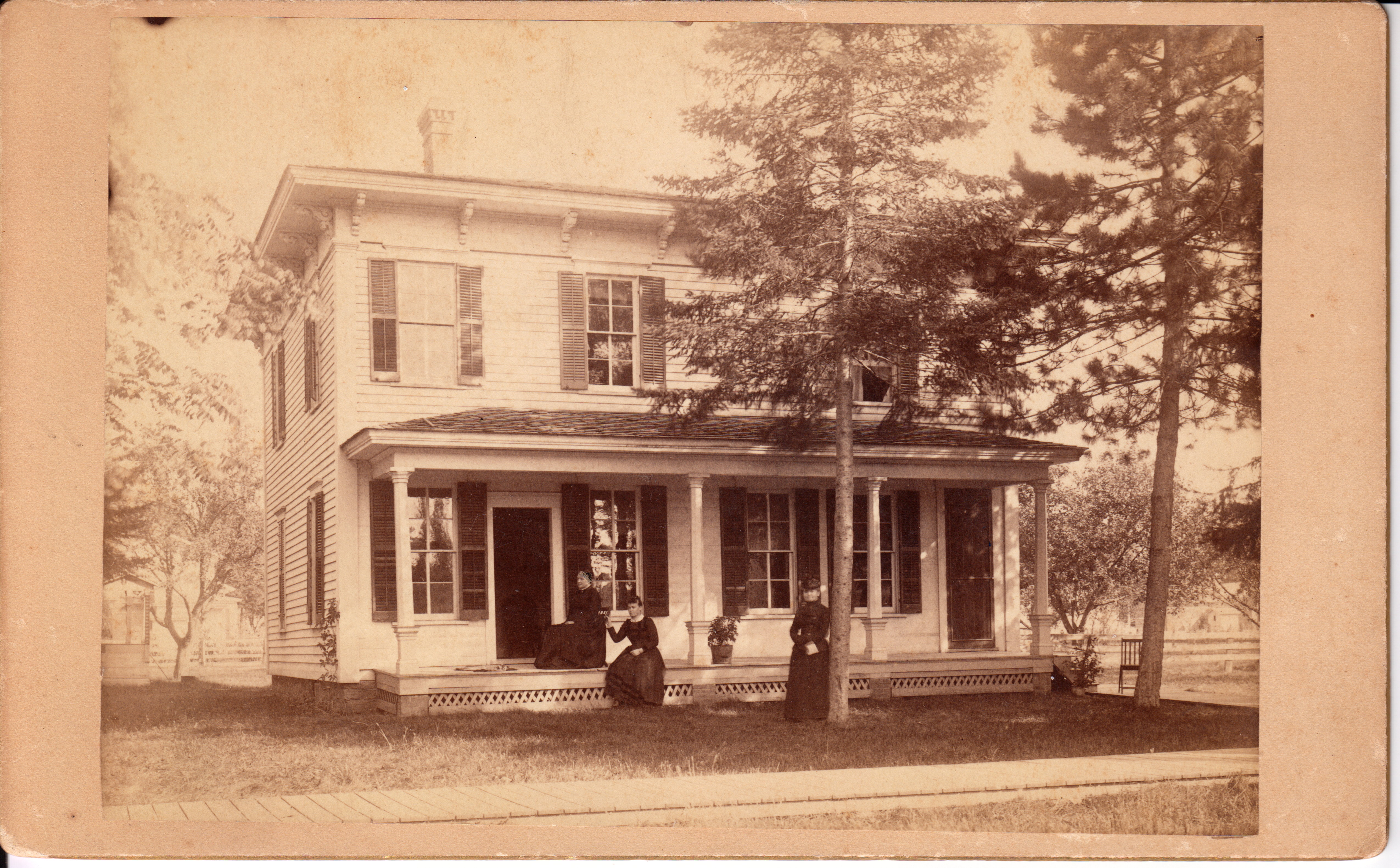
They purchased a large house within a block of the Evansville Seminary in 1868. The house at the
northeast corner of Church and Third Streets had been started by early pioneer, Jacob West and his
sons in 1864 and was not quite finished when the Andrews family moved to Evansville.
Sarah's father, William Wright, also came to live with them and it was because of his love of forestry that
the land surrounding the house was planted with maples from Sugar River, elms, apple, walnut,
butternut, and pine trees. The Andrews family referred to the home as "The Grove". The home
remained in the Andrews family for more than 80 years.
All five children lead diverse and interesting lives. Byron, the oldest son and Eleanora, the oldest
daughter were registered at the Evansville Seminary in 1869. John Cain Andrews wanted to give his
family the benefit of a good education and the Evansville Seminary advertised that they could do just
that.
Family friends of the Andrews', the Pullens, La Follettes, and Wilders were also residents of Argyle,
Wisconsin in the late 1860s. All arrived in Evansville at approximately the same time, primarily because
of the educational opportunities offered at the Seminary.
Their children had been playmates in the small community of Argyle. Byron and Cassian Andrews,
Perry Wilder, Charlie Pullen, and Robert LaFollette had organized a boy's military company during the
Civil War. They wore light brown pants with red trimming, red flannel shirts, red and blue caps. The
boys practiced marching drills, as well as conduct they thought becoming to a soldier and gentleman.
While they were never old enough to enlist in the Civil War, their patriotic spirit stayed with them the rest
of their lives.
When Byron graduated in 1871, he decided to further his education and attended Hobart college in
Geneva, New York and received a degree in 1875. He then pursued a career in journalism that would
take him into the powerful circle of Washington politics. It was his writing skills that brought fame and
fortune to Andrews.
Byron served as a special correspondent to the Inter Ocean newspaper and traveled with President
Ulysses S. Grant on his famous world tour in the late 1870s. Grant's tour took him to points around the
globe, meeting with kings and queens, royalty of every kind, politicians and businessmen.
Grant was so impressed with Andrews' writing that Byron was asked to serve as secretary to the first
Industrial Excursion to Mexico to open trade with that area. Byron also served as President Grant's
private secretary on the trip to Mexico in the spring of 1880. Grant was interested in opening a railroad
network that would stretch from Southern Mexico to the United States. The line would facilitate trade
between the two neighboring nations.
Despite the efforts to promote his image, Grant did not receive the nod for a third term as President.
However, Andrews' skills were sought by the new administration. When President Garfield was elected
to office in November 1880, Byron Andrews was asked to serve on his Inauguration Committee.
Andrews was married in 1881 to Belle Fiske, daughter of the Governor of Kentucky. They lived most of
their married life in Washington, D. C. where Byron became the head of the Washington bureau of the
Inter Ocean newspaper. He later served as manager of the National Tribune and was able to purchase
part ownership in the paper.
A champion of the Republican Party, Andrews was asked to write a biography of John A. Logan, a
United States Senator from Illinois and organizer of the Grand Army of the Republic for Northern Civil
War veterans. Logan had created Memorial Day, first observed in 1868 and fought vigorously for
pensions for the former soldiers.
When William McKinley campaigned for president in 1896, Andrews was called on to be his biographer.
One of the People : the career of William McKinley was a 400 page book that dramatically presented
McKinley as a citizen-soldier, congressman, and governor. There was also a brief biography of vice-
presidential candidate, Garret A. Hobart. It was offered to anyone who would send in 20 cents to pay
the postage. One newspaper described the book as being especially helpful to people who were "on
the fence and want to acquire all information regarding the candidate."
Byron was the image of a devoted big brother in his family. His sisters and brothers relied on his
counsel and were sometimes indebted to him for jobs and home.
He never forgot his Wisconsin heritage and could repeat verbatim, whole speeches he had learned as a
young boy practicing to be a citizen soldier. After his retirement, he remained in Washington D. C., but
returned to his family home on West Church Street in October 1910 where he died. After a funeral
service in Evansville, he was taken to Covington, Kentucky to be buried in his wife's family plot.
Cassian, the second son of John and Sarah Andrews, was fourteen years old when his parents moved
to their home on Church Street. He was educated at the Evansville Seminary and in the late 1870s
Cassian; his father; brother, Jerome; and his sister, Eleanora, became pioneers and moved West to the
Dakotas. The family homesteaded three sections of land in what is today Kingsbury county South
Dakota. Cassian married Sarah Ingalls and together with their six children, they operated a successful
farm near Erwin, South Dakota. His father, John, also came to live with them.
Cassian's mother, Sarah Andrews, never seemed to find the pioneer way of life appealing and she didn't
like the climate in South Dakota. Although she made frequent trips to the Dakotas, she made her home
at 262 West Main. John C. Andrews spent most of the remainder of his life in South Dakota and died
there in 1896 at the home of Cassian. He was buried near his last homestead, in the Erwin cemetery.
After successfully homesteading, Cassian retired and moved to Maryland to be closer to his brother,
Byron. Cassian and Byron who had been life-time friends, as well as brothers, died within three months
of each other.
Jerome, the youngest son, had an even greater wanderlust than the others. For a few years he
homesteaded in the Dakotas, and then headed further west to Wyoming where he bought a horse
ranch. Still seeking adventure, he got the "gold fever" in the late 1890s and headed to Alaska and
helped to develop the El Dorado claim.
Jerome was one of the successful Klondikers and on his return trip to the United States, also became a
hero. He boarded a ship called, Bertha, and headed for the lower U.S. While at sea, the ship began to
list and go adrift. Jerome lead twenty minors as they shifted the ballast in the hold so that the ship could
right herself and continue on its journey.
After his Alaska venture, Jerome settled on an island in Puget Sound, Washington and also bought a
ranch near Kent, a suburb of Seattle. He died in 1921 and his final resting place was in Maple Hill
Cemetery in Evansville.
The oldest daughter of John and Sarah Andrews, Eleanora, was born in 1855 in Argyle. The fact that
the Evansville Seminary was co-educational was a great attraction to the Andrews family who wanted
their daughters to be educated, as well as their sons. Eleanora enrolled in the Seminary in 1869 and
graduated in 1874.
She attended the Seminary during a time of great upheaval. The Methodists had pulled out of the
institution they had organized in 1855 and it was under the leadership of the Free Will Baptists.
Eleanora's class was the first to graduate under the new administration. It was also the last, as the
controversial principal, George Bradley withdrew from the organization and became a newspaper man.
For several years, the school stood vacant.
After graduation, Eleanora went to New York to study art at the Metropolitan Museum of Art with her
fellow classmate, Theodore Robinson. Eleanora remained at the school in New York for three years
and then went with her father and brothers to homestead in the Dakotas. Like her mother, Eleanor
preferred the family home in Evansville. After she had established her claim to the land, she returned to
Wisconsin and divided her time between Dakota and 262 West Church.
Eleanora lived with her mother and sister, Marilla, in the family home at 262 West Church Street. In
1883, a short newspaper article noted that they built an addition to the house.
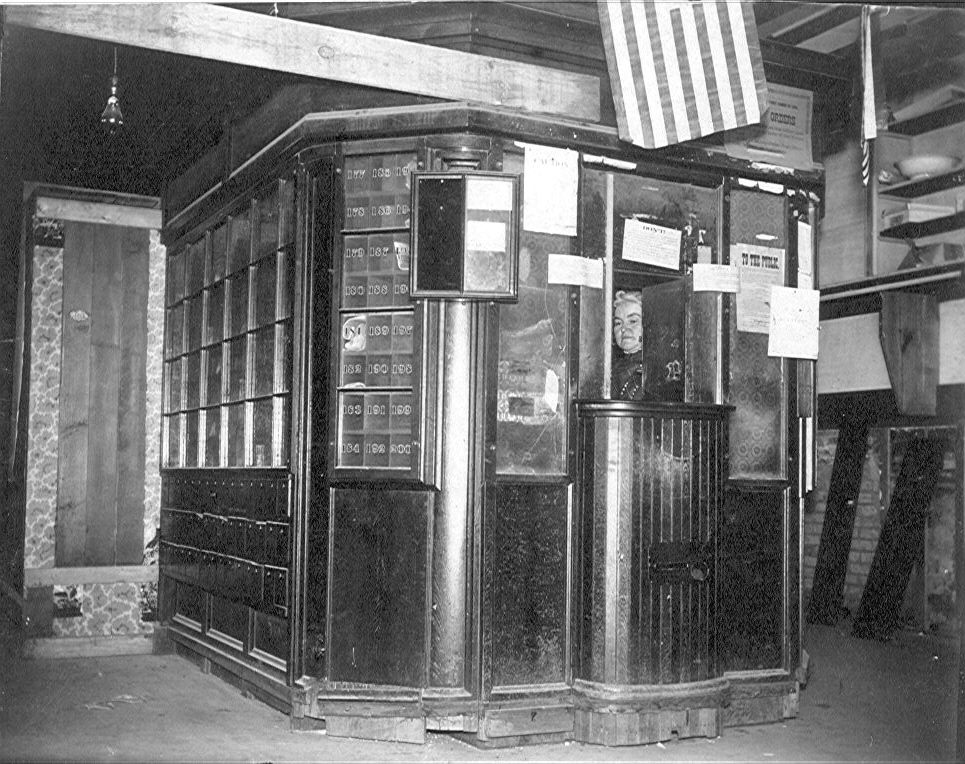
Eleanora was appointed as a post office clerk in Evansville in 1892. The Evansville Review noted two
years later, "We sincerely hope that at no great distant day she may be placed at the head of that
institution as she richly deserves."
Four years later, Eleanor announced that she was a candidate for the Presidential appointment as post
master. "I shall base my claim upon my four year's experience as the Assistant in the office. I am
personally acquainted with every regular patron of the office."
On her brother, Byron's, recommendation, Eleanor was appointed by President William McKinley to fill
the postmaster's position in February 1898. Newspaper editor, Caleb E. Libby had also sought the post
on the basis of his status as a disabled Civil War veteran and supporter of McKinley. Eleanor however
continued to receive the appointment and served three terms as postmaster. It was during her
administration that rural free delivery service was started in the Evansville area.
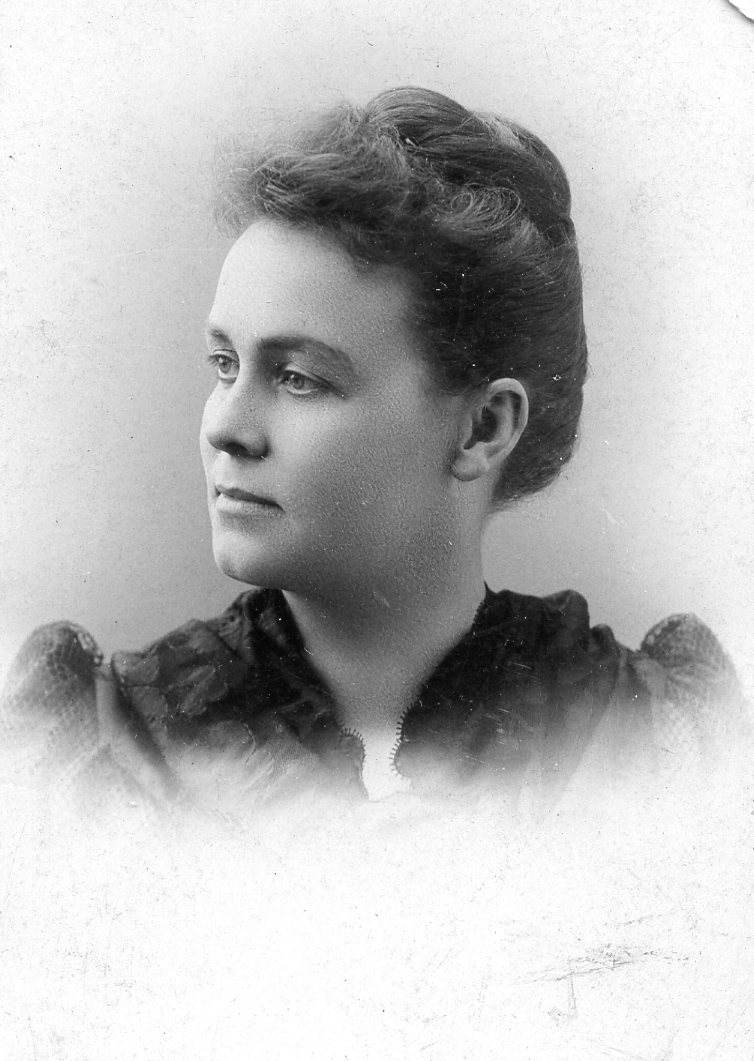
Eleanora, her mother, and sister Marilla were active participants in the social and literary circles in
Evansville. Marilla was just four years old when her family moved into the house on West Church
Street. Like her brothers and sister, Marilla also attended the Evansville Seminary. This time, the
school was under the administration of the Free Methodist Church and Marilla was in the first graduating
class in 1884.
Two years after she graduated, Marilla opened Evansville's first pre-school in the family home. It was
called an "infant school". However, she is best known as the first woman editor of a newspaper in
Evansville. The paper was called "The Badger."
Marilla went to college several years after she had graduated from the Evansville Seminary. She
graduated from the University of Wisconsin in June 1892 and went to live with her brother Byron's family
in New York, where he had charge of the offices of the National Tribune in that city. With his assistance,
Marilla became a reporter for the National Tribune.
Two years later, when she returned to her home in Evansville, she had already made up her mind to
publish her own newspaper. The offices were located in the "Pioneer Block", at what is now 8 South
Madison Street. With the introduction of the Badger, Evansville had four weekly papers, including The
Evansville Review, and Caleb Libby's The Enterprise and the Tribune.
The Badger was devoted to local and national news and carried a full page of Evansville advertising and
news. Marilla was a load voice for women's rights. She also advocated a city form of government for
Evansville, as well as a public water works and sewer system. She wrote of the need for a public library
with a reading room and reference department, supported by local taxes.
Like her brother, Byron, she supported McKinley for President in 1896. "The Republican party is
mindful of the rights and interests of women. Protection of American industries includes equal
opportunities, equal pay for equal work and protection to the home," she wrote in one of her editorials
supporting the Presidential candidate. It would be more than 20 years before her dream of the right to
vote became a reality.
Her support of local projects was not always in line with the views of the voters. When the local school
became crowded in the late 1890s, she became a champion for neighborhood schools for the youngest
children. Marilla taught sixth and seventh grade in the Evansville schools in the late 1890s and also
served as grade school principal in 1897. This was accomplished while she also edited her newspaper
and occasionally acting as City Clerk in the absence of the regular clerk.
Marilla was very concerned about the education of Evansville's youth. To overcome the crowded
conditions, she offered the suggestion in her newspaper that a school be placed on East Main Street
and another on West Main Street, thus freeing up the available school class rooms for the intermediate
and high school students. However, a proposal to build a new high school won the citizens favor.
In 1894, Marilla helped to form the Women's Literary Club. The first meeting was held at the Andrews'
home in October 1894. Marilla was voted vice-president of the new organization.
Marilla also became editor of a Wisconsin newspaper devoted to the right of women to vote. It was
called "The Citizen". Marilla also helped to bring focus on Evansville by helping to bring state-wide
suffrage meetings to the city, including many nationally known speakers. As a business owner, Marilla
joined other Evansville women in promoting industrial growth and civic projects.
Following her sister, Eleanora's terms as post master, Marilla was appointed to the office. Eleanora
helped in the office and sometimes served in Marilla's post if she was on vacation.
During the time the Andrews family owned the house, there were few major structural changes to the
house. In 1907, Sarah Andrews added a large porch on the south side of the house and built a large
bedroom porch on the north side of the second story. She also added a cement walk and curb around
the south and west side of the corner lot property. Further remodeling was completed in 1909 when
Sarah hired Herman Ayers to do carpenter work and Isaac Brink for masonry.
Sarah Andrews died in 1912 and the house at 262 West Church Street was given to the two daughters,
Marilla and Eleanora. The sisters kept the home much as it had been when they were children. Tables
and bedroom sets that had arrived by wagon from Janesville to Argyle were treasured family
possessions. A table that had served as a study table for the entire family when they were students at
the Evansville Seminary still held a valued place in the house at 262 West Church.
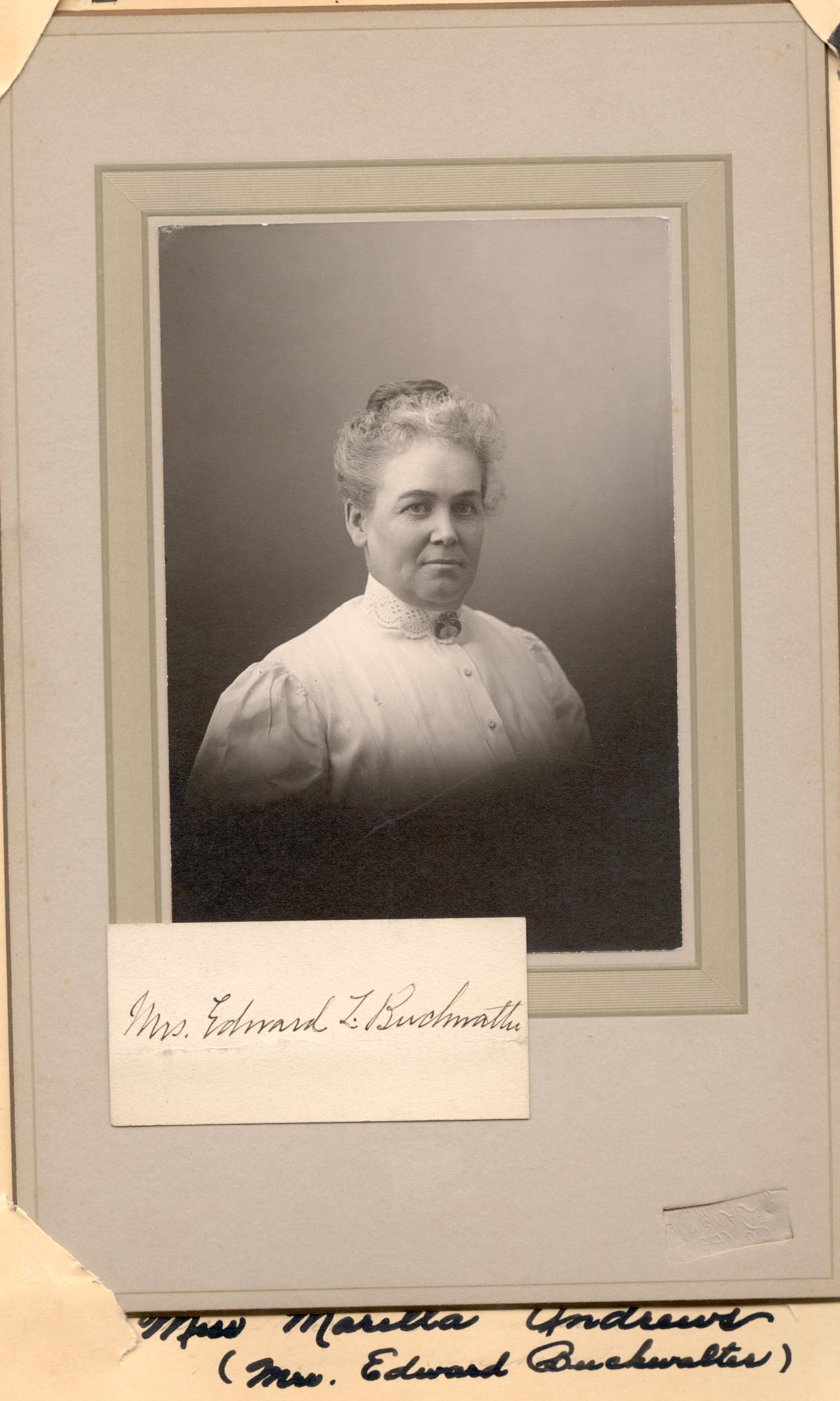
A frequent visitor in the Andrews home was the widower of one of their Ohio cousins, Captain Edward
Buchwalter, a Civil War Veteran from Springfield Ohio. He married Marilla Andrews in 1914 and they
moved to Ohio where she became a teacher in a school operated by Buchwalter.
From 1914 to 1934, the house was used only occasionally by the Andrews sisters. Eleanora also
moved to Springfield, and divided her time between Evansville, South Dakota and Ohio.
Captain Buchwalter died in 1932 and within two years, Eleanora and Marilla had returned to the family
home. Eleanora died in her home on West Church Street in December 1938 and Marilla died in the
home four years later.
Daisy Groh, purchased the house after Marilla's death and rented it in March 1943, to Mr. and Mrs.
Harlan Bliss who planed to open a private boys school in the house. The Bliss' were from Beloit and
Mrs. Bliss had worked at the Leota School for Girls located on South First Street. The new school was
to be called the Badger School for Boys.
The Bliss' made plans for keeping riding horses, creating a basketball court and other outdoor
equipment that could be used by the boys. They made arrangements with William Bone, owner of the
Leota School, to send the boys to classes offered there.
It was a short-lived enterprise and the home was once again returned to a private residence. Daisy
Groh sold the house to George Krebs in 1945. George was a pharmacist in business with his brother
Ed. George lived in the house for three years, then sold it to Stan Rivers.
The house was purchased in 1951 by Walter and Mim Spratler. It was a dream come true for the couple
who had grown up in neighboring houses on the north side of West Church Street. Marilla Andrews,
who had been a long-time member of the Episcopal Church, was Walter's Godmother. He had spent
many happy hours playing in the yard and visiting at the home of the Andrews.
Walter did a large remodeling project on the house. He cut through the walls of several rooms, taking
what had been a sixteen-room house and making twelve rooms. Instead of six bedrooms, there were
now four. He also removed several doors that he thought were unnecessary and paneled the walls
surrounding the fireplace. Walter had the new woodwork custom made to match the original.
Spratler also removed the long porch that had been built in 1907 and created a smaller one. The
original entrance had been in the middle of the south side of the house and Spratlers created a new
entrance placed on the southeast corner of the house.
Walt and Mim Spratler raised three daughters in the house at 262 West Church Street. Several years
after Mim's death in 1980, Walter decided to sell the house and live in Florida.
Sally Zingg purchased the house in 1987 and opened Evansville's first bed and breakfast the following
year. She called the new enterprise "Pine Grove" because of the pines surrounding the home. Offering
hospitality to family and visitors from far and near has been a tradition in the house at 262 West Church
for more than 120 years.
It was purchased in 2005 by Richard and Louise Keeley.